Category Archives: PR

PR Lessons from Sports This Week: Tiger F, Lysacek A+

What a great week for learning public relations (PR) from sports figures. First, we have (yet another) figure skating controversy with Evgeni Plushenko earning “only” silver despite having done quadruple jumps which the gold medalist, Evan Lysacek, did not.  Then, we have the Tiger Woods confession — after 3 months of silence — for his extramarital affairs.

I’m not judging morally or technically:  I blog about business, I know little about golf and even less about figure skating.  I am, however, judging PR strategy and skills in handling these situations.  In my estimation, Tiger gets an F and Lysacek gets an A+.

Why?

Lysacek did a simply amazing job in last night’s interview with NBC’s Bob Costas.  Either Lysacek is the best PR “natural” I have ever seen, or he has simply world-class PR advisors.  Despite Costas repeatedly baiting him, Lysacek looked a home-run hitter at batting practice, swatting away the inflammatory questions.

Excerpt (after having just shown a video of Plushenko saying that he thought he merited the gold):

Costas:  “Plushenko said:  ‘if the Olympic champion doesn’t know how to do quadruple jump, … now it’s not men’s figure skating, it’s dancing, … you can’t be considered a true men’s champion without the quad.’”

Lysacek:  “well, I think no one likes to lose, and a lot of what he’s saying is probably coming from a little bit of disappointment and anger so, taking it out of context, I don’t think, for me, I can’t be emotional or react to it …”

That is simply a superb answer.   He gets the real issue on the table (bitterness), takes the high ground, and refuses to answer the question all at the same time.  But it gets better:

Lysacek, continuing:  “the truth is that he’s been a force to be reckoned with in men’s skating for the last decade and has been a great role model for me …  [he] did something that no one thought was possible, [took time off,] came back, and got his third Olympic medal — two silvers and a gold — and that’s not something to be taken lightly.”

Wow.  Call the guy who’s attacking you a role model and then cite his accomplishments in a clear and precise way.   This guy is good.

But it doesn’t stop there, Costas continues:  “Plushenko said:  ‘ … the sport itself is regressing if the Olympic champion doesn’t do the quad, just doing nice transitions and being artistic, that’s not enough, because figure skating is a sport, not a show,’ again quoting him.”

Lysacek:  “Well I think it’s interesting that he puts so much emphasis on just one step in the program.  It is a 4 minute and 40 second skating routine so we have to put together our strongest moves — jumps, spins, and footwork — and we’re graded on everything we do in between …”

Here he’s answering the question, but using a powerful technique — framing — in how he answers.  Sure Plushenko wants to make it about one jump, but what about the other 4 minutes and 35 seconds?  It gets better:

Lysacek:  “… interesting enough, last night we tied on the component scores (the old artistic scores), and where I edged him — slightly — was on the technical scores which means my jumps were graded better than his and my spins were graded better than his.”

This guy’s on fire.  First, he reframes the problem back to whole-routine and then fires a cannon through the “dancing” argument by saying, “uh, by the way, I won on technical scores.”  And I love the passive voice :  not “my spins were better,” but “my spins were graded better.”  But it gets better still:

Lysacek:  “… to me he had a challenge, he had to skate last, he had to wait until the end of the event, he had the most pressure on him because he was leading after the short program, and I thought he looked incredible.  He went out and skated great and, for me, I congratulate him and hope that he’s 100% satisfied with that.”

Costas:  “Was he gracious to you in the immediate aftermath?”

Lysacek:  “Yes, he was very nice.  He’s a great guy.  I known him for a long time.  I’ve looked up to him for a long time.”

What do I love about Lysacek?

  • Great delivery
  • Absolute sincerity and ergo credibility
  • Great use of facts
  • Refusal to engage in an emotional conflict
  • Remapping the questions:  saying what you want to say almost regardless of what was asked

Now, let’s look at Tiger’s confession, via some excerpts:

Now every one of you has good reason to be critical of me. I want to say to each of you, simply and directly, I am deeply sorry for my irresponsible and selfish behavior I engaged in …

But still, I know I have bitterly disappointed all of you. I have made you question who I am and how I could have done the things I did. I am embarrassed that I have put you in this position …

The issue involved here was my repeated irresponsible behavior. I was unfaithful. I had affairs. I cheated. What I did is not acceptable, and I am the only person to blame …

I stopped living by the core values that I was taught to believe in. I knew my actions were wrong, but I convinced myself that normal rules didn’t apply. I never thought about who I was hurting. Instead, I thought only about myself. I ran straight through the boundaries that a married couple should live by. I thought I could get away with whatever I wanted to. I felt that I had worked hard my entire life and deserved to enjoy all the temptations around me. I felt I was entitled. Thanks to money and fame, I didn’t have to go far to find them.

I was wrong. I was foolish. I don’t get to play by different rules. The same boundaries that apply to everyone apply to me. I brought this shame on myself. I hurt my wife, my kids, my mother, my wife’s family, my friends, my foundation, and kids all around the world who admired me.

I’ve had a lot of time to think about what I’ve done. My failures have made me look at myself in a way I never wanted to before. It’s now up to me to make amends, and that starts by never repeating the mistakes I’ve made. It’s up to me to start living a life of integrity.

Let me be a little cynical here, but in terms of frequency “star athlete / rockstar / celebrity / politician has affair” should be a dog-bites-man, not a man-bites-dog story.  How is that John Denver can write his affairs into song lyrics

There’s so many times I’ve let you down,
So many times, I’ve played around,
I’ll tell you now, that they don’t mean a thing

… and get away with it, while Tiger gets hung out to dry?  (And yes, I know there are a few decades in between.)

The first mistake Tiger made (other than the affairs) was letting this story get so big.  Some of that was out of his control (e.g., his enormous popularity) but a lot of it was controllable.  He could have just said earlier what he ended up saying later:  look, it’s no surprise that star athletes get a lot of “temptations” and I, uh, gave in.  My bad, it happens all the time, and what’s between me and wife is none of your business.  Next story, please.

But, having holed up for three months, he’s turned an “oh, another athlete had an affair” story into the Tiger Woods 24 Hours Mystery.  And, unfortunately, his confession does nothing to provide the details that he should now sadly provide if he wants to kill off the mystery angle, once and for all.

His delivery was poor:  scripted, stiff, hollow, robotic, insincere.

I didn’t like the way “therapy” was pitched.  You could substitute “disease” for “affair” and “drug” for “therapy” and the script would still make sense.  While I might sound harsh, that smacks of not taking responsibility.

The whole framing of the announcement was wrong.  Who is he apologizing to?  Everyone, it seems, but as one fan said:  “he doesn’t owe me an apology.”  Is he apologizing the sponsors who already fired him?    If so, send them a letter.  In his public statement, he should be apologizing to his wife and his kids, period.  The rest should be commentary for the media.  Not a confession.  Not an apology.

The execution was bad as well.  Media attendance was limited to three reporters, alienating the journalists he’s trying to reach.  The timing was in conflict with a golf event, further irritating the golf establishment.  There was no Q&A, which further reinforced the stiff/scripted perception.

So what I did dislike about the Tiger confession?

  • Insincere
  • Scripted
  • The therapy angle
  • Poorly timed
  • The mass apology framing

If I were Tiger’s PR advisor, I’d say the message (which should have been delivered fast) should be:

  • I got caught up in the celebrity bubble
  • I admit that I had affairs
  • I apologize to my wife and kids for what I’ve done
  • Any questions about my wife and family — either past or future — are  personal, and I will not answer them
  • Deep down I am unhappy and in therapy to try and fix that core problem
  • I hope to return to golf within a year
  • If I learn any lessons that are useful to others in this process, I hope to share them in the future (think:  book!)
  • This is extremely difficult for me and I thank you for your support

I value speed and authenticity in PR which is why I am so negative on the Tiger confession.  But I must admit that the media has responded pretty positively to it, for example, this piece in the New York Times, entitled Vulnerability in a Disciplined Performance.

New York Times on the Changing Ways of Silicon Valley PR

Quick post to highlight this New York Times story, Spinning the Web: PR in Silicon Valley. The article starts with the story of a start-up first pondering, and then deciding not to pitch the big tech blogs like TechCrunch.

Excerpt:

Instead, [publicist Brooke Hammerling] decides that she will “whisper in the ears” of Silicon Valley’s Who’s Who — the entrepreneurs behind tech’s hottest start-ups, including Jay Adelson, the chief executive of Digg; Biz Stone, co-founder of Twitter; and Jason Calacanis, the founder of Mahalo.

Notably, none are journalists.

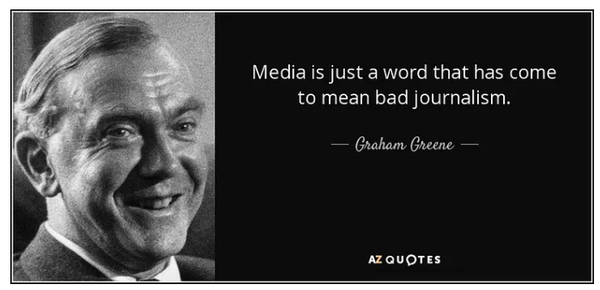
This is the new world of promoting start-ups in Silicon Valley, where the lines between journalists and everyone else are blurring and the number of followers a pundit has on Twitter is sometimes viewed as more important than old metrics like the circulation of a newspaper.

The article goes on to discuss what, in my opinion, are truly massive changes to the business of Silicon Valley PR over the past five years, driven by changes in the B2B trade press and the rise of social media.

While the article raises many good points, I think its over-reliance on Ms. Hammerling starts to make it feel — in an ironic twist of journalistic narcissism — like a puff piece about her: the journalist admiring the PR person instead of focusing on the changes in the business.

Over the years, her contact list swelled to the point that her stories now overflow with dropped names. There are the e-mail messages from Larry Ellison, the chief executive of Oracle, and the time she handled a client’s crisis from her BlackBerry while traveling to St. Barts to join the former Hollywood überagent Michael Ovitz and his family on his yacht. Or the time she was in her bikini at a Mexican resort, checking her e-mail at the hotel’s computer, when Ron Conway, a veteran tech investor, walked in.

Or the purportedly secret poker party she threw in her suite at a recent tech conference: “All my friends were there — Arianna was there, the Twitter boys were there,” …

“Arianna told me I was a great hostess, and I thought I was going to die,” she said

Corporate Blogging: Go Real or Go Home

As frequent readers know, I’m a contrarian when it comes to most things, including corporate blogging. Most companies, it seems, want corporate blogs that are written by junior PR people, repackage corporate good news, and recycle standard corporate messages.

Validating my suspicions, a few months back I had a few inquiries from former marketing teammates asking: “Hey Dave, you seem to know something about CEO / corporate blogging — so should my CEO have a ghost-written blog?”

My answer was a vehement no!

With the standard approach, most corporate blogs are easily identified by would-be readers as “marketing” and accordingly avoided. In fact, according to a recent study by Forrester (subscription required), only 16% of consumers trust corporate blogs, ranking dead last in trust among information channels surveyed.

See this post by corporate blogging expert Debbie Weil, entitled No News Here: Forrester Says Users Don’t Trust Corporate Blogs. Excerpt:

Many corporate blogs are A. boring and B. not credible. They’re written in corporate speak. And they gush about the company or its products or services (what I call widgets). Forrester analyst Josh Bernoff blogs about his new report, encouraging companies “to be thoughtful in how and why you blog.”

And that’s precisely the point I make in my book: NO ONE CARES ABOUT YOUR WIDGETS!

Unless, of course, your widgets happen to be XML Servers. (Just kidding.) More:

Secondly, saying that consumers don’t trust corporate blogs is kind of like saying that people don’t trust advertising. Well, duh. We’ve been talking about that (cf the Cluetrain Manifesto) for a decade now.

It’s a shame that marketing is becoming a synonym for truthiness. I’ve lamented before about the state of marketing, particularly in software.

My advice:

  • If you’re going to make a corporate blog, go real or go home.
  • There is no point in ghost-written or PR-written blogs.
  • In my view, corporate blogs shouldn’t exist. If you want a corporate blog, go find a few corporate bloggers instead.
  • Encourage those bloggers to write openly and honestly about your industry.
  • Let them ramble off-topic once in a while. You might discover something.

Related articles by Zemanta

My Third All-Time Favorite High-Tech PR Gaffe

Until today, I had two all-time favorite high-tech public relations (PR) oops-es:

  • The first was when some company sent The New York Times a softcopy of a press release in Microsoft Word without first accepting all the revision marks. The journalist who received the press release changed the view in Word to show the complete revision history and got to see a live demonstration of the corporate weasel-wording process.
  • The second was when Google’s new head of investor relations sent a PowerPoint slide deck to analysts and forgot to sanitize the notes section, inadvertantly leaking both confidential financial projections and a new product announcement. I blogged about that one, here.

Ever wonder why most PR people now convert both Word and PowerPoint documents to PDF before sending them out?

Well, today, I have a third all-time favorite. See this amazing story where Microsoft (and/or their PR firm Waggener Edstrom) accidentally mailed a briefing document prepared for a spokesperson to the journalist that was interviewing him, Fred Vogelstein of Wired.

If you’re at all interested in PR then you have to read the briefing document, here.

If you’re not interested in PR you should probably read it anyway, because you will get a first-hand education into just how much work large companies spend on pitching stories and preparing spokespeople for press interviews.

In my opinion, Waggener Edstrom president Frank Shaw should have eaten some humble pie and/or simply shut up, but instead — as I suppose would be every PR maven’s instinct — he tried to make lemonade out of lemons here. It didn’t work for me at all nor, judging by the comments on his post, did it work for most other people either.

Wired editor in chief Chris Anderson has an interesting and fairly charitable post on his blog, here.