Ten Ways to Get the Most out of Conferences
Same conference, adjacent booths. One company has an epic show; the other calls it a waste of time. Before you blame the event, look at how you worked it. Here are ten ways to get the most out of conferences and tradeshows.
I can’t tell you how many times, as we were tearing down our booth after an epic show, we overheard the guy next door call headquarters to say the show was a “total waste of time” and the company shouldn’t do it again next year. Of course, he forgot to mention that he:
- Staffed the booth only during scheduled breaks and went into the hallway to take calls at other times.
- Sat inside the booth, safely protected from conference attendees by a desk.
- Spent most of his time looking down at his phone, even during breaks when attendees were out and about.
- Didn’t use his pass to attend a single session.
- Measured the show solely by qualified leads for his territory, assigning zero value to company visibility and leads for other territories.
Does this actually happen, you think? Absolutely. All the time. (And it makes you think twice when you’re on the other end of that phone call: was the show bad, or did we execute poorly?)
I’m a huge believer in live events and an even bigger believer that you get back what you put into them. The difference between a great show and a bad show is often, in a word, execution. In this post, I’ll offer ten tips to help you get the most out of the conferences you attend.
Here they are:
1. Send the right people. Send folks who can answer questions at the audience’s level or one level above. Send folks who are impressive. Send folks who are either naturally extroverted or can put on their “game face” for the duration of the show. Send folks who want to be there, either because they’re true believers who want to evangelize the product or because they believe in karma [1]. Send senior people (e.g., founders and C-level executives) [2] so they can continue to refine the message and discuss it with potential customers.
2. Speak. Build your baseline credibility in the space by blogging and speaking at smaller conferences. Then do your homework on the target event and what the organizers are looking for, and submit a great speaking proposal. Push for it to be accepted. Once it’s accepted, study the audience and give the speech of your life to ensure you get invited back next year. There’s nothing like being on the program, possibly even delivering a keynote, to build credibility for you and your company. And the best part is that speaking at a conference, unlike most everything else, is free.
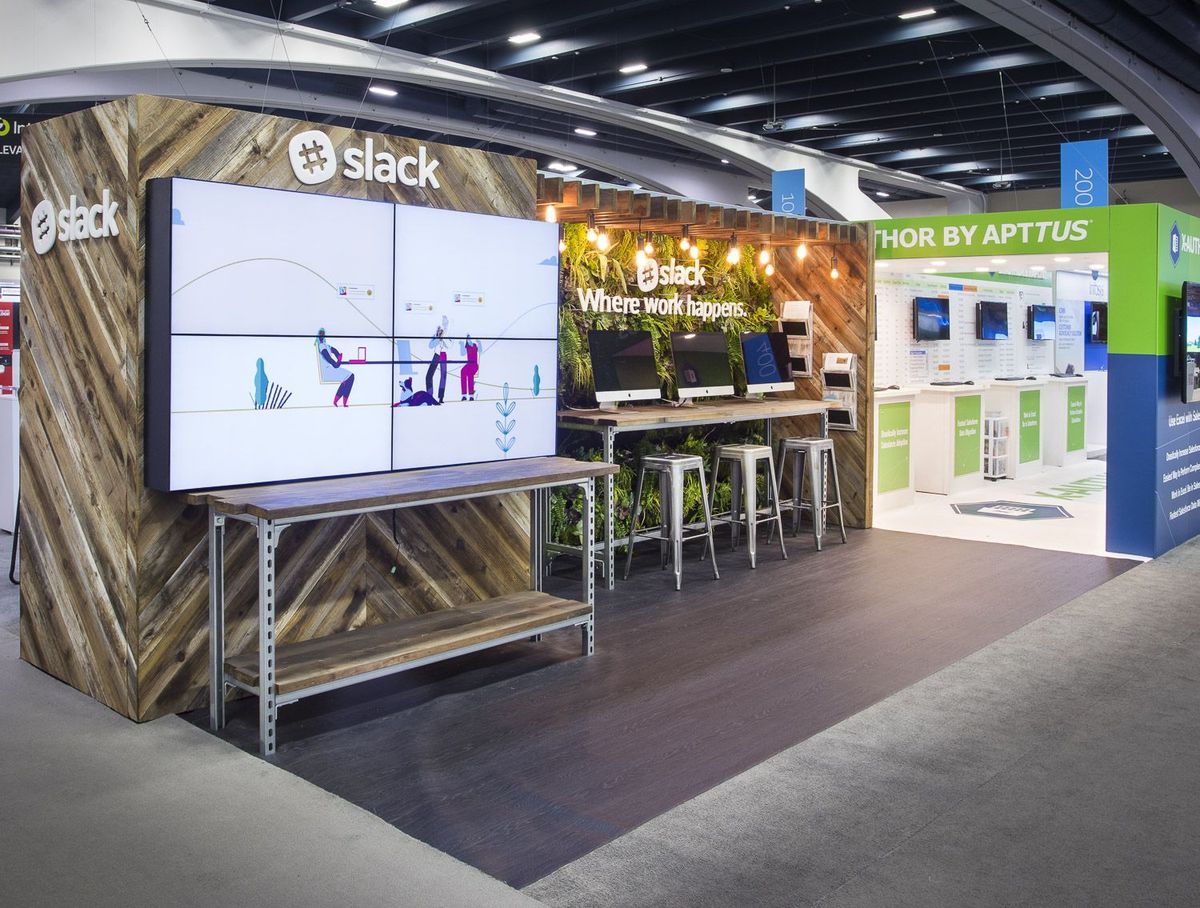
3. If you can afford a booth/stand, get one. Don’t get fancy here. Get the cheapest one and then push hard for good placement [3]. Even Slack’s relatively barebones Dreamforce booth would be fancy for most early-stage startups. But imagine what Slack could have spent if they’d wanted to. The restraint is good. You’re there to get leads and engage with people in your market, not win a design competition.
4. Stand in front of your booth, not in it. Expand like an alfresco restaurant onto the sidewalk in spring. This effectively doubles your booth space.
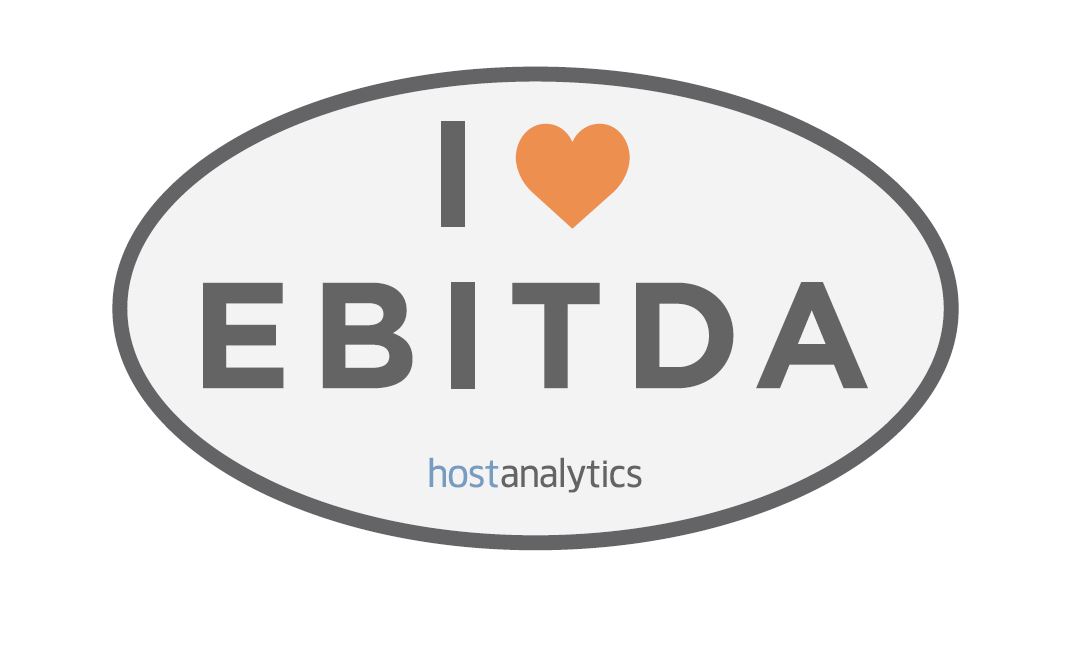
5. Think guerrilla marketing. What can make the biggest impact at the lowest cost? I love stickers because a clever sticker can get attention and end up on someone’s laptop, generating ongoing visibility. At Host Analytics, we had great success with stickers, including this one, which finance people (our audience) simply loved [4].
While I love guerrilla marketing, remember my definition: things that get maximum impact at minimum cost. Staging fake protests or flying airplanes with banners over the show may impress others in the industry, but both are expensive. And I don’t think they impress customers, who are primarily interested in solving business problems, not vendor politics.
6. Work the speakers. Don’t just work the booth during and outside scheduled breaks. Go to sessions. Ask questions that highlight your issues, but not specifically your company. Talk to speakers after their sessions to tee up a follow-up call. Talk to consultant speakers to build partnerships or fish for referrals. Perhaps try to convince speakers to incorporate parts of your message into their talks [5].
7. Avoid “Free Beer Here” stunts. If you give away free beer in your booth, you’ll get a huge list of leads from the show. However, this is dumb marketing. You buy beer for lots of unqualified people and, worse yet, generate a giant haystack of leads that you need to dig through to find the qualified ones. You end up paying twice for your mistake. While it’s tempting to leave the show with the most card swipes, remember that you’re there to generate visibility, have great conversations, and leave with the most qualified leads. Not, not, not the longest list of names.
8. Host a Birds of a Feather (BoF). Many conferences use BoFs (or equivalents) as a way for people with common interests to meet informally. Using either an online or old-fashioned cork message board, anyone can organize a BoF by posting a note that says, “Attention: All People Interested in Deploying Kubernetes at Large Scale. Let’s Meet in Room 27 at 3 PM.” If your conference doesn’t have BoFs, ask the organizers to start them, or organize one yourself using whatever general messaging facility is available.
9. Everybody works. If you’re big enough to have an events person or contractor, make sure you define their role properly. They don’t just set up the booth and go back to their room all day. Everybody works. If your events person limits their role by saying, “I don’t do content,” I’d suggest finding another events person.
10. No whining. Whenever two anglers pass along a river and one asks, “How’s the fishing?” the universal response is “good.” Not so good that they’ll ask where you’ve been fishing, and not so bad that they’ll ask what you’ve been using. Just good.
Be the same way with conferences. If asked how it’s going, say “good.” Ban all discussion of how the conference is going, including whining, until it’s over. If it’s not going well, whining won’t help. If it is going well, you should be out executing, not talking about how great it is. From curtain-up to curtain-down, all you should care about is execution. Once the curtain’s down, you can debrief, and do so more intelligently with complete information.
Notes
[1] In the sense that, “If I spend time developing leads that might land in other reps’ territories today, what goes around comes around tomorrow.”
[2] To avoid title intimidation or questions about “why your CEO is working the booth,” you can have a technical cofounder say, “I’m one of the architects of the system,” or your CEO say, “I’m on the leadership team.”
[3] Build a relationship with the organizers. Do favors for them and help when they need you. Politely ask if anyone has moved, upgraded, or canceled their space.
[4] Again, note where execution matters. If the Host Analytics logo were much larger on the sticker, I doubt it would have been so successful. It’s the sticker’s payload, so the logo has to be there. Too small and it’s illegible; too big and no one puts the sticker on their laptop because it feels like a vendor ad instead of a clever sticker.
[5] Not as a free ad, but as genuine content. Imagine you worked at Splunk back in the day and a speaker just gave a talk on using log files for debugging. Wouldn’t it be great if you could convince her to say next time, “While there is clearly a lot of value in using log files for debugging, there is also a potential goldmine of information in those files for general analytics that basically no one is exploiting. Certain startups, like Splunk, are starting to explore that new and exciting use case.”