While it’s taken me a while to post on this Wall St Journal article, it’s still as relevant today as it was back in July. The article discusses the recent dearth of IPOs, arguing that the long-closed IPO window is changing the way startups think about themselves, they way venture capitalists think about startups, and threatening the great Silicon Valley venture-capital-driven innovation machine.
In a blog that generally offers more critique than praise, I’d simply say: I think the author’s right. Fewer startups run the gauntlet to IPO and I think that’s the result of three things:
- The SOX “tax” – an estimated $2M-$3M annual nut – which all but wipes out the bottom line of what were previously IPO-ready companies and reduces market caps. Example: for a 50% growth company with a 1.0 PEG ratio, $3M in SOX expense wipes out $150M in market cap.
- Lack of demand in the public markets. As mentioned here before, when you look the Software Equity Group’s IPO pipeline, you can impute that the IPO window is what I call 50/50/0 — i.e., $50M+ in TTM revenues, 50%+ growth, and 0% EBITDA. But, while that may be the window to make it potentially worth filing – make no mistake – the IPO market is currently closed.
- Industry consolidation. The article surprisingly misses this point, but the software industry has sufficiently consolidated that plunking down $75M to buy a plateaued startup is nothing, and even paying $300M – $500M to buy someone on a roll is basically chump change. And, if you’re SAP, Oracle, Google, or Microsoft, even $1B isn’t much to buy your way out of a strategic headache – and heck – since goodwill is no longer amortized and they’re typically buying with stock and can cut enough costs to make the acquisitive instantly accretive, it’s effectively “free” anyway.
The last point sometimes makes me wonder if software will end up like pharma or biotech where it seems that big companies have effectively outsourced innovation to startups. The big guys are willing to pay big dollars for the few who succeed in order to avoid billions of R&D that it takes to find the winners. Simply put (and from quite a distance) it seems they’ve outsourced the financing of innovation to venture capitalists.
If I were at one of the big software oligopolists, I probably do the same thing. I’d watch ten startups, let 3 fail, let 3 fail into mediocrity and buy them for chump change, and pay 10x revenue for the one that went red hot. You win some, you lose some. And – even when you lose you win – because you are so much larger than your targets that you can let them grow to even $200M in revenues and still buy them without much pain.
That’s a new dynamic.
This prompts the question: is the next-generation of VC-backed startups built-to-flip instead of built-to-last? Frankly, I think the answer’s a mix.
Increasingly, I think web 2.0 startups that take relatively little capital are running a different formula than classical enterprise software vendors. The latter might raise $30M in VC, hoping to go public with a $500M market cap. The former might raise only $10M, hoping for a quick sale at $50M. This changes venture economics, but the system can still work.
Prior to Mark Logic, I’ve worked at only three software companies: Ingres, Versant, and Business Objects. All three were venture backed. All three went public. And all three went public – more or less – in the year in which they did $30M in revenues. My, how things have changed!
By contrast, let’s look at Endeca, a player in enterprise search who started out in e-commerce search, bringing OLAP-style dimensional navigation to the content world. Later, the company branched into more areas (seemingly too many if the recent stuff I’m reading about spend management, other apps, and a DBMS-like positioning is correct).
Per a recent 451 Group report Endeca did about $100M in revenues in 2007, growing 70% over 2006, with 500 staff, 500 customers, an average deal size of $350K and a 90/10 direct/indirect channel model. They’re silent on profitability, though they recently raised a $15M venture round bringing total investment to about $65M, suggesting they’re still burning cash. The numbers, with the exception of the unknown profitability and the high direct sales dependency (which are quite possibly linked), overall look pretty good.
But Endeca first talked about an IPO in 2006 and 2+ years later they’re still all dressed up with nowhere to go. Why? I’d guess it’s a combination of the IPO window closure and (perhaps) some process issues related to compliance, which these days are another leading cause of IPO stall-out and an indirect form of SOX tax.
Frankly, I think it’s too bad. While I want to crush Endeca in the relatively few deals in which we compete (and complement them in the relatively few where we do that as well), I nevertheless believe that Joe Investor should be able to buy their stock. By forcing the de facto IPO bar ever higher, the US is locking out individual investors from participating in early-stage technology companies. That’s not good.
Why’d we do it, then? Because of the excesses of the web bubble and the early 2000s, one says. But, when I think about that era, the problems fall into two distinct classes:
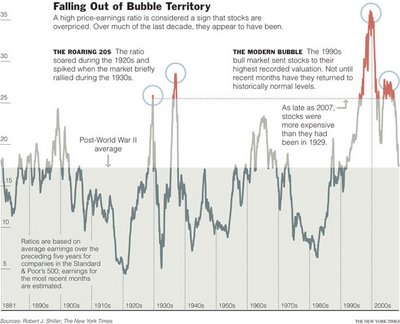
- Investors awarding $1B valuations to startups with $5M in revenues. While I think this was ostensibly insane, it should nevertheless be permissible – no one forces you to buy a share of Beyond.com in 1999. No one forces an investor to participate in a speculative bubble. Some would argue they’re a normal market phenomenon. They shouldn’t be outlawed. Caveat emptor.
- Fraud a la Enron. This needs to be wiped out. No question. (For an interesting perspective on Enron, read Open Secrets by Malcom Gladwell.)
Somehow, I think we mixed up the two different problems along the way by enacting laws that throw the early-stage baby out with the anti-fraud bathwater. The result is that individual investors are denied access to early-stage growth companies and, the Journal argues at least, that we are threatening the health of the Silicon Valley innovation machine.
 Quoting Curt: